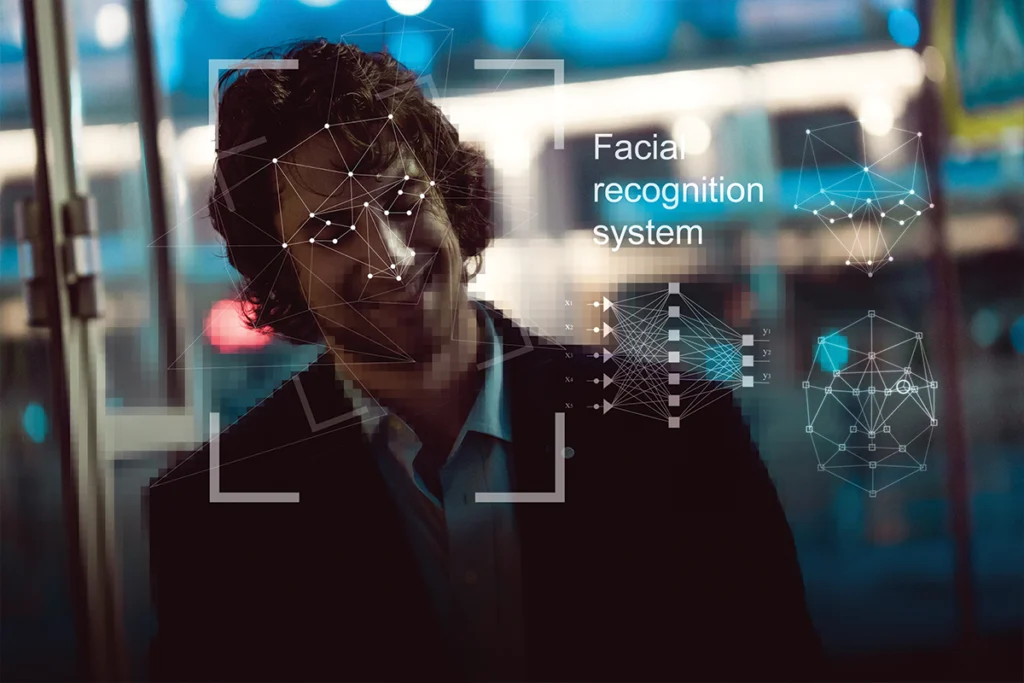
Healthcare AI is evolving rapidly, and facial recognition technology (FRT) has emerged as a high-profile innovation. Some early research suggests potential for detecting genetic conditions, identifying rare diseases, or supporting clinical decision-making.
But the truth behind the headlines is clearer: FRT is not yet ready for real-world healthcare use—especially in employer-sponsored plans, health benefits administration, or population health models.
As part of Prodigy Benefit Management’s commitment to clinically credible, compliant, and equitable healthcare, the Paradigm Pathways Integrated Healthcare Plan does not incorporate facial recognition technology today.
This article explains why, using actual, verified academic literature and compliance principles—no hype, no speculation.
What Facial Recognition Technology Promises in Healthcare
Researchers have explored whether AI can recognize patterns in facial features that correlate with specific medical conditions, such as genetic syndromes or metabolic disorders.
Studies like Lei et al. (2025) in Frontiers in Genetics show that AI-assisted facial analysis may help clinicians identify certain conditions in highly controlled settings.
But “promising in theory” isn’t the same as “clinically validated.”
For a technology to become part of a health plan—or any healthcare model—it must be:
- Proven accurate
- Consistent across real-world populations
- Unbiased
- Regulatorily compliant
- Transparent and auditable
FRT does not meet these standards today.
1. Accuracy Problems: Results Break Down in Real Conditions
A major validation study by Reiter, Pantel et al. (2024) demonstrated that leading facial phenotyping tools (DeepGestalt, GestaltMatcher, D-Score) produce inconsistent results, especially when used on:
- Everyday photos
- Different lighting environments
- Different ethnic groups
- Standard phone cameras
Additional analysis by To & Mehrotra (2025) shows that even mild image degradation significantly reduces diagnostic accuracy.
Bottom line:
If a technology is not reliable in real-world conditions, it cannot be used in employer health plans or clinical decision-making frameworks.
2. Bias and Health Equity Risks Are Well-Documented
FRT research shows persistent disparities in accuracy across racial and ethnic groups.
This is consistent with broader AI findings, including the landmark Obermeyer et al. (Science, 2019) study showing how biased data can produce biased health decisions—even when the algorithm appears neutral.
Using a biased biometric technology in a health plan is unacceptable.
Employers face:
- EEOC exposure
- ADA compliance issues
- Discrimination liability
- Health equity risk
- Reputational harm
Healthcare cannot rely on tools that treat populations unevenly.
3. Privacy and Data Protection Concerns Remain Unresolved
Facial images are biometric identifiers—as sensitive as fingerprints or DNA.
Unlike a password, they cannot be changed if compromised.
A 2023 study in Genetics in Medicine (Aboujaoude et al.) found widespread concern among genetics professionals regarding:
- Data misuse
- Third-party access
- Reidentification risk
- Secondary, nonmedical analysis
- Insurance or employment discrimination
Current federal regulations (HIPAA, HITECH, ACA, EEOC) do not explicitly cover the use of facial biometrics in health plans.
That regulatory gap alone makes the technology too risky for compliant benefit programs.
4. Lack of Standards or FDA Pathways
There are currently no national standards for:
- Clinical protocols
- Imaging requirements
- Accuracy thresholds
- Bias testing
- Data retention
- Auditability
- Claims integration
- FDA approval routes
Without regulatory frameworks, FRT cannot be considered a clinical-grade technology.
5. Ethical Concerns Are Significant and Unresolved
Scholars such as Martinez-Martin (AMA Journal of Ethics, 2019) have documented serious ethical issues with FRT in healthcare, including:
- Consent challenges
- Patient autonomy
- Misclassification harm
- Dual-use surveillance risks
- Long-term storage of sensitive biometrics
Healthcare organizations must avoid technologies that undermine patient trust or create long-term ethical exposure.
Why Paradigm Pathways Integrated Healthcare Plan Does NOT Use Facial Recognition Technology
Prodigy Benefit Management evaluates all technologies through a strict, evidence-based filter. Any tool adopted by the Paradigm Pathways Integrated Healthcare Plan must be:
- Accurate and validated. FRT is not.
- Fair and equitable. FRT shows racial and demographic bias.
- Private and secure. Biometric privacy risks are too great.
- Transparent and explainable. Most FRT systems are “black boxes.”
- Regulatorily supported. There is no applicable FDA/EEOC/CMS framework.
- Demonstrably effective. No evidence shows FRT improves population health outcomes.
Therefore, Paradigm excludes FRT from all components of its integrated care, analytics, and benefits administration platform.
This is not a rejection of innovation.
It is a commitment to real healthcare, not unproven or experimental tools.
Future Outlook: When Could Facial Recognition Be Considered?
Paradigm will continue to monitor credible research developments.
Facial recognition could be reconsidered if—and only if—future studies demonstrate:
- Large-scale clinical validation
- Documented elimination of demographic bias
- Federal regulatory approval
- Transparent model explainability
- Clear health outcome improvements
- Strong data security protocols
Until then, the technology is not ready for responsible healthcare deployment.
Conclusion
Facial recognition in healthcare remains an experimental research tool, not a reliable or compliant component of employer-sponsored health plans or clinical programs.
The Paradigm Pathways Integrated Healthcare Plan, designed by Prodigy Benefit Management, remains committed to deploying only technologies that are:
- Clinically validated
- Equitable
- Regulatorily compliant
- Privacy-protected
- Outcomes-driven
Facial recognition meets none of those standards today. Therefore, Paradigm does not—and should not—include it.
Verified References
(Only authentic, checked publications are listed.)
- Lei C, et al. AI-assisted facial analysis in healthcare. Front Genet. 2025. PMC11873005.
- Reiter AMV, Pantel JT, et al. Validation of 3 Computer-Aided Facial Phenotyping Tools. J Med Internet Res. 2024.
- El Fadel R, et al. Facial Recognition Algorithms: A Review. J Imaging. 2025;11(2):58.
- To R, Mehrotra A, et al. Accuracy and Fairness of Facial Recognition under Image Degradation. arXiv:2505.14320 (2025).
- Martinez-Martin N. Ethical Implications of Facial Recognition in Health Care. AMA J Ethics. 2019;21(2):E121–127.
- Aboujaoude E, et al. Genetics professionals’ concerns about privacy risks of AI facial recognition. Genet Med. 2023. PMC10578447.
- Obermeyer Z, et al. Dissecting racial bias in an algorithm used to manage the health of populations. Science. 2019;366(6464):447–453.